The shift from Generative AI to Agentic AI represents the most significant transformation in software architecture since the cloud. We are moving beyond "systems of recommendation" into "systems of execution," where autonomous agents move money, settle transactions, and manage real-world outcomes. This article defines the Full Action Loop, a structured behavioral sequence of Perceive, Ask, Compose, Act, Pay, and Monitor and introduces the Agent-Generated Combo Kit as the new unit of digital value. As the market for Agentic AI approaches an estimated $196B by 2034, organizations must transition from conversation-based chatbots to action-oriented agents to remain visible in an automated economy.
Introduction: Why This Shift Matters
For decades, the goal of software was to reduce the "time to information." Today, that goal has evolved into reducing the "time to intent fulfillment." When a user asks an AI for help, they aren't looking for a list of steps; they are looking for a result.
The transition from recommendation to execution changes software forever because it removes the "human-in-the-checkout-line" bottleneck. By granting agents the authority to act—via APIs, financial rails, and real-time biometric feedback, we are closing the gap between human desire and physical reality. In this new era, the UI is no longer a destination; it is a ghost layer that only appears when an agent needs clarification.
The Chatbot Was Never the Destination
Chatbots were a necessary bridge, but they remained passive. They surfaced options but required the user to perform the labor of transaction. The "Agentic Era" recognizes that conversation is often just high-friction friction. If an AI knows you have a fever, it shouldn't just tell you about paracetamol; it should ensure that paracetamol is arriving at your door within twenty minutes. This leap from "Standard ChatGPT" to "Autonomous System" is defined by the delegation of authority and the ability to persist across sessions to ensure a problem is actually solved.
The Rise of Agent-Generated Combo Kits
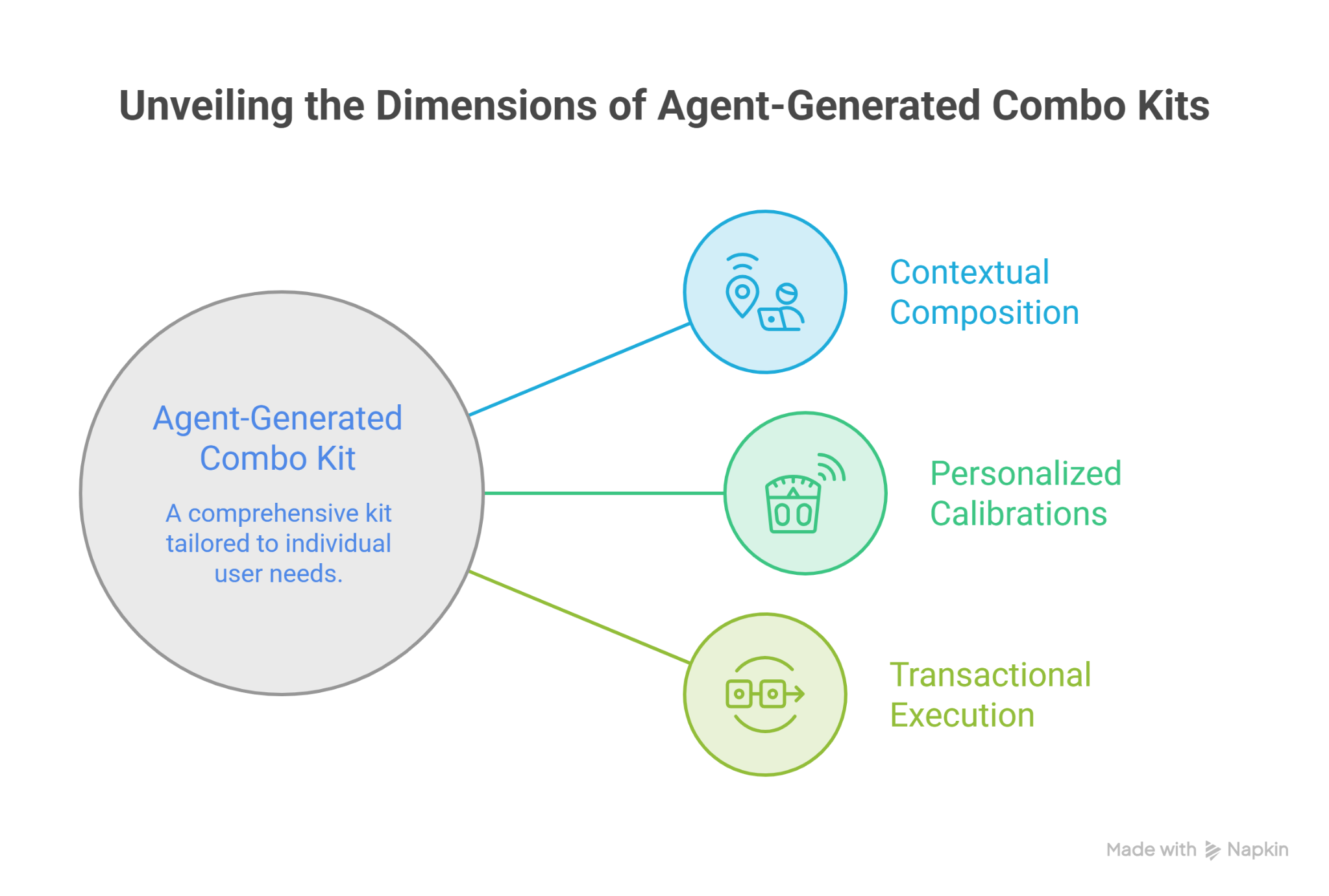
The Agent-Generated Combo Kitmarks a critical evolution in digital commerce. Moving beyond static "Add to Cart" workflows, these kits represent a dynamic shift toward autonomous, intent-based value creation. In the context of Agentic AI, a Combo Kit is a real-time, highly personalized bundle of goods and services generated by an autonomous system to meet a specific, live user need.
Unlike traditional e-commerce bundles, Agent-Generated Combo Kits are defined by four architectural pillars that drive SEO-valuable, high-intent user experiences:
- Contextual Composition: Rather than relying on rigid, pre-configured inventory databases, these kits are assembled from real-time environmental signals (e.g., IoT data, sensor inputs), ensuring the solution matches the immediate user context.
- Hyper-Personalization (The Body-Profile Standard): Leveraging advanced Agentic AI, these kits calibrate quantities, dosages, and product selections against unique user biometrics (allergies, health history, and physical metrics) to deliver medical and consumer precision.
- Autonomous Transactional Closure:By utilizing secure, pre-authorized financial rails, agents eliminate the high-friction manual checkout bottleneck. This enables true "Intent Fulfillment," where the user’s goal is achieved without further administrative labor.
- Lifecycle Orchestration: The agent-to-user relationship persists post-purchase. By maintaining an open loop, the agent provides continuous value through proactive reminders, delivery status updates, and recovery monitoring, effectively transforming a one-off transaction into an ongoing, service-oriented relationship.
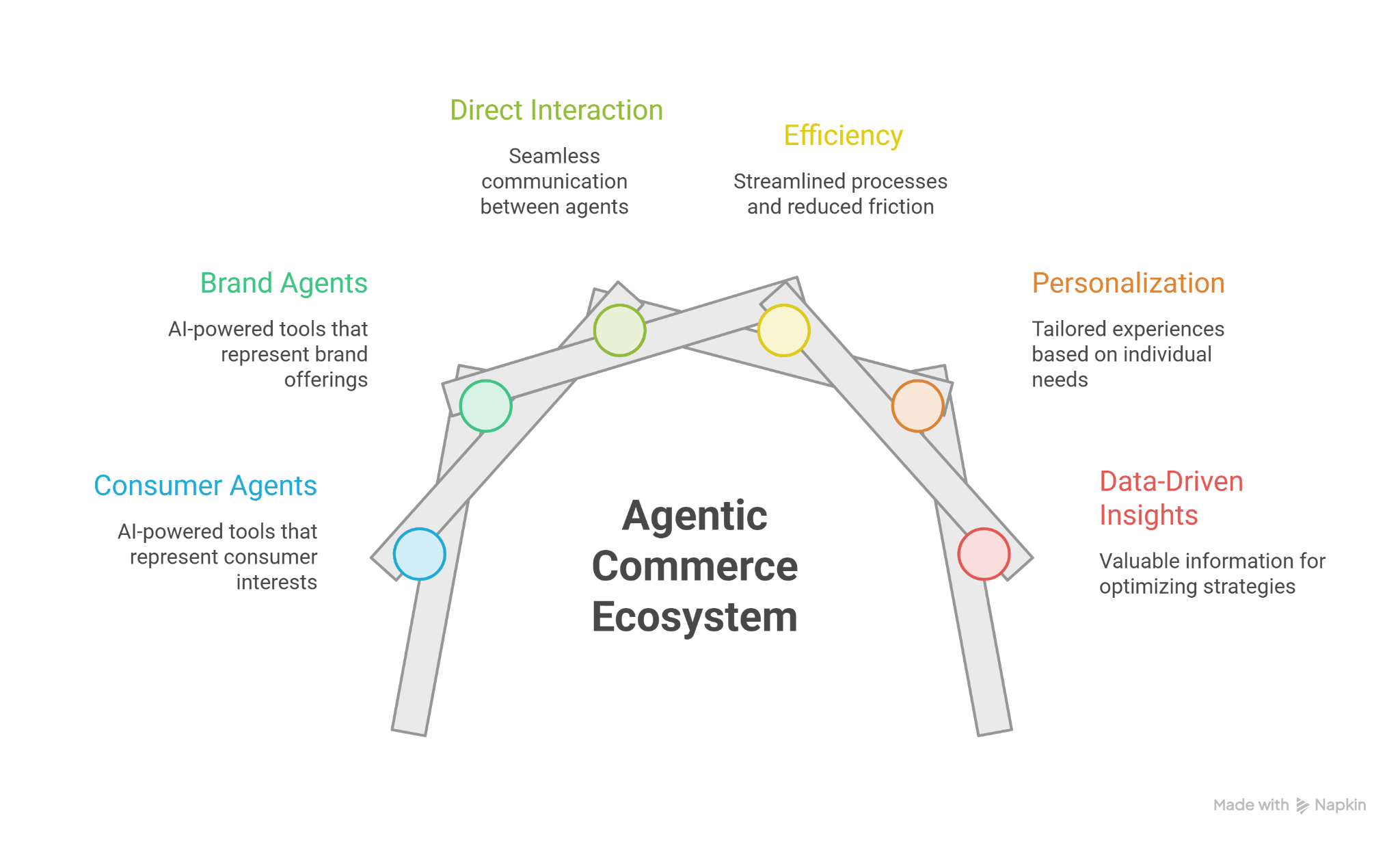
As industry leaders pivot toward Agentic Commerce, the Combo Kit is emerging as the definitive unit of value for the automated economy.
Architecture for Autonomy: The Full Action Loop Framework
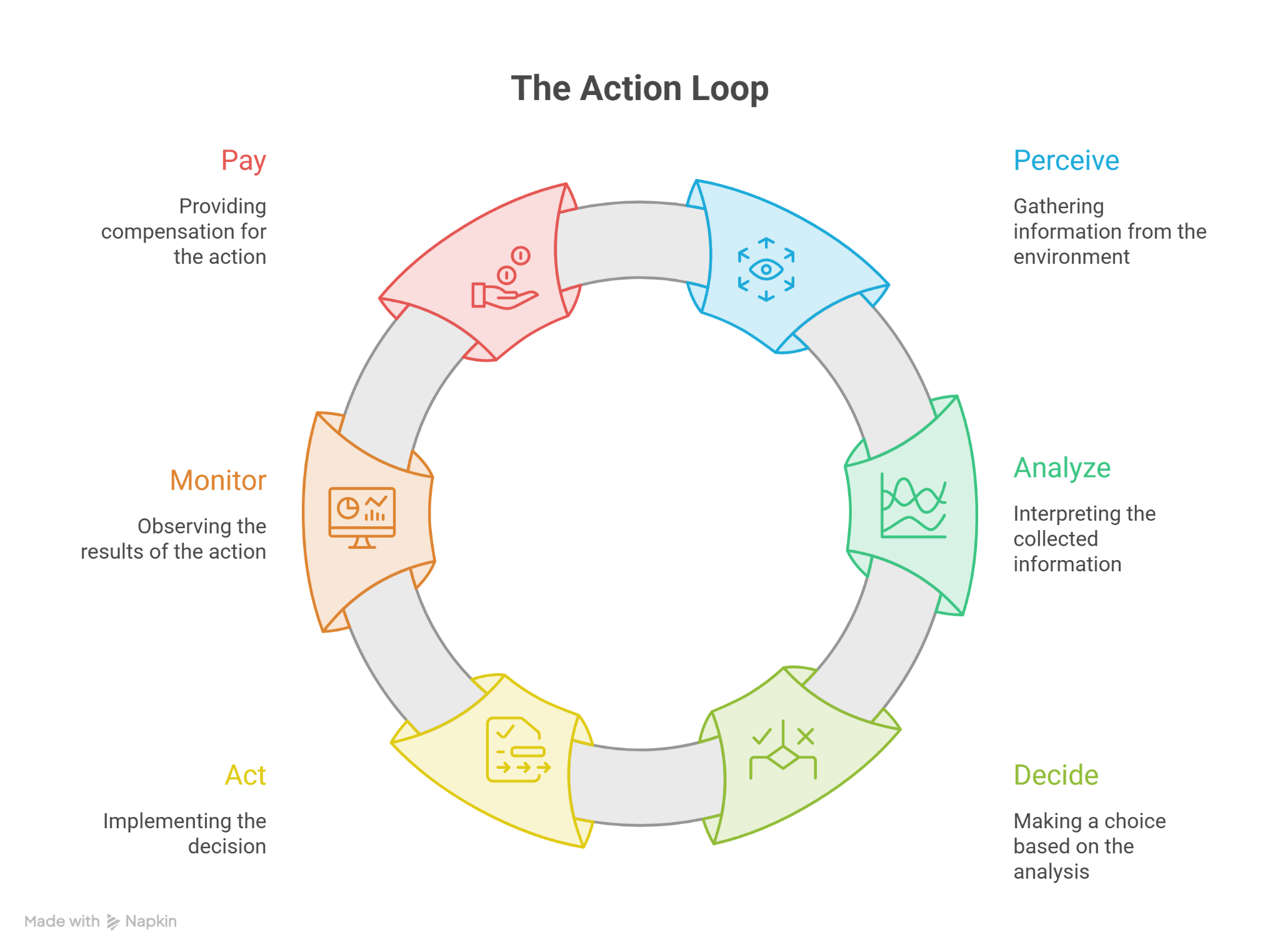
To transcend the limitations of conversational AI, modern software systems must adopt a structured behavioral sequence. We define this architecture as the Full Action Loop, a six-stage framework designed to enable Autonomous Agents to bridge the gap between human intent and real-world execution. Unlike linear LLM chains, this loop is iterative, ensuring the agent stays active until the objective is fully realized.
- 1. Perceive: The Data Ingestion Layer
The agent continuously monitors the user’s digital and physical perimeter. By ingesting real-time signals—such as IoT telemetry, biometric data from wearables, or calendar fluctuations—the system establishes context before any action is initiated. - 2. Ask: Intent Clarification & Verification
To minimize hallucination and prevent high-risk errors (e.g., contraindications in medical workflows), the agent executes a verification step. By strategically asking for user confirmation, the system ensures intent accuracy and aligns with Agentic AI safety standards. - 3. Compose: Real-Time Strategy Synthesis
The agent synthesizes a multi-step strategy based on the perceived data and verified intent. This involves complex logic such as calculating precise pharmaceutical dosages based on biometrics—and grouping them into a coherent "Action Package" for execution. - 4. Act: Bridging the Digital-Physical Divide
Using robust API-first architecture, the agent interacts with external services to execute the strategy. This is where the agent moves beyond text generation, programmatically logging into platforms, filling shopping carts, and manipulating external state to meet the user's goal. - 5. Pay: The Transactional Threshold
This stage represents the defining threshold of Transactional AI. By leveraging pre-authorized financial rails, the agent independently settles payments. This closure is critical for "Intent Fulfillment," as it eliminates the manual, high-friction checkout bottleneck common in legacy e-commerce. - 6. Monitor: Open-Loop Lifecycle Management
The agent maintains an "open loop" until the objective is definitively resolved. It continuously tracks outcomes such as delivery logistics, inventory status, or health trends providing the user with continuous value and exception management long after the initial transaction has been settled.
AI Agent vs. Chatbot: A Framework of Governance
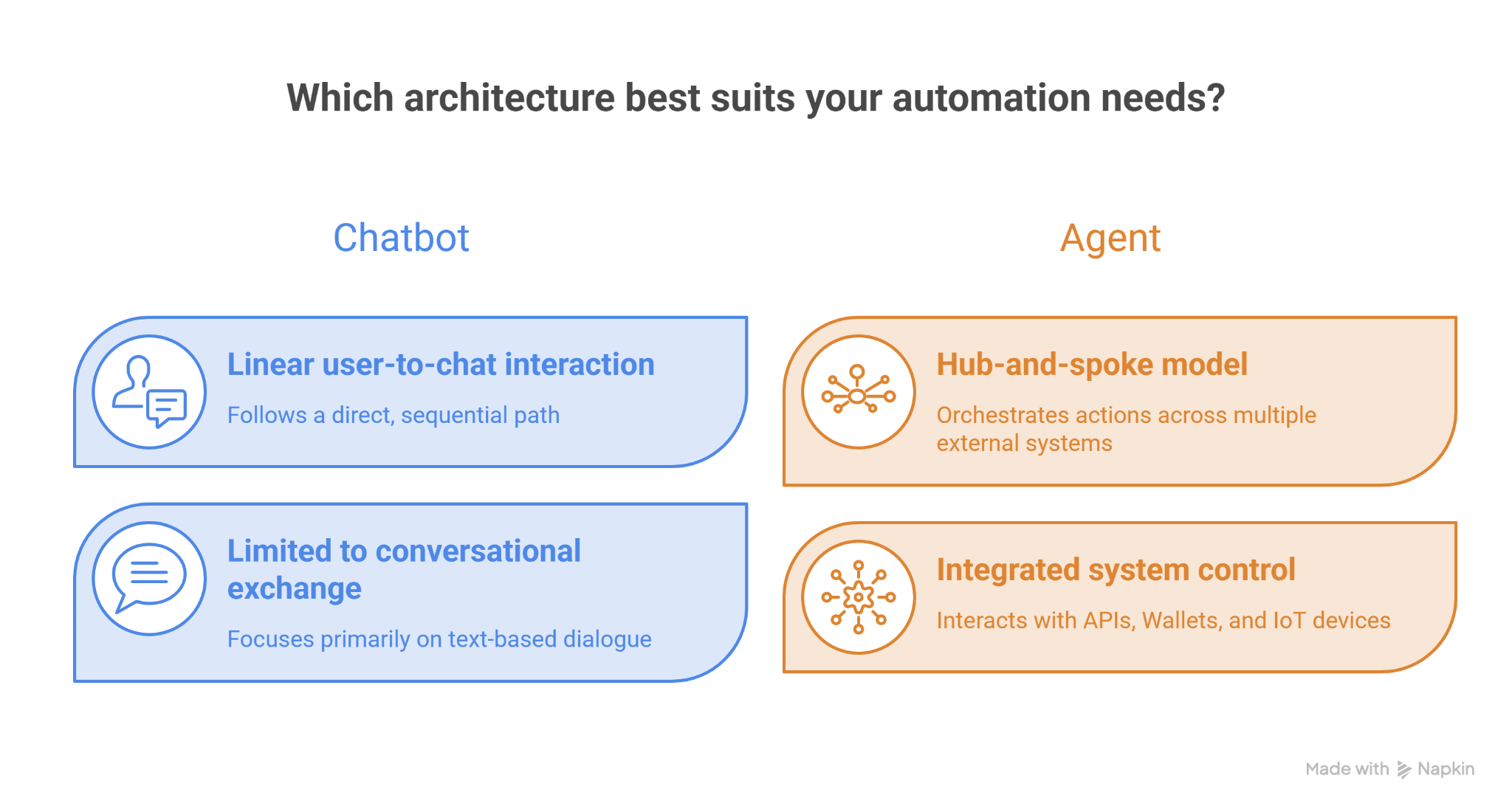
The distinction between these systems lies in their integration and accountability. While chatbots rely on manual prompts and output text or images, autonomous AI agents react to environmental/biometric changes, output real-world actions, manage autonomous payments, and are bound by systemic audit logs and guardrails rather than passing all risk to the human user.
Market Intelligence: The Competitive Landscape of Agentic AI
The global Agentic AI market is projected to reach $196.6B by 2034. Industry leaders are rapidly pivoting from "Systems of Record" to "Systems of Action." Key market developments include:
- Microsoft: Expanding the "Copilot" ecosystem to bridge enterprise productivity tools with autonomous task execution.
- Salesforce Agentforce: Deploying CRM-native autonomous agents designed to execute sales and service workflows without manual intervention.
- OpenAI: Advancing "System 2" reasoning and multimodal models capable of executing complex, multi-step world interactions.
- Anthropic: Focusing on persistent context and "Computer Use" capabilities, allowing models to operate software interfaces with human-like precision.
- LangGraph: Emerging as the industry-standard orchestration layer, facilitating cyclic, complex agentic workflows rather than simple, linear chains.
The Governance Gap: Mitigating Risks in Autonomous Systems
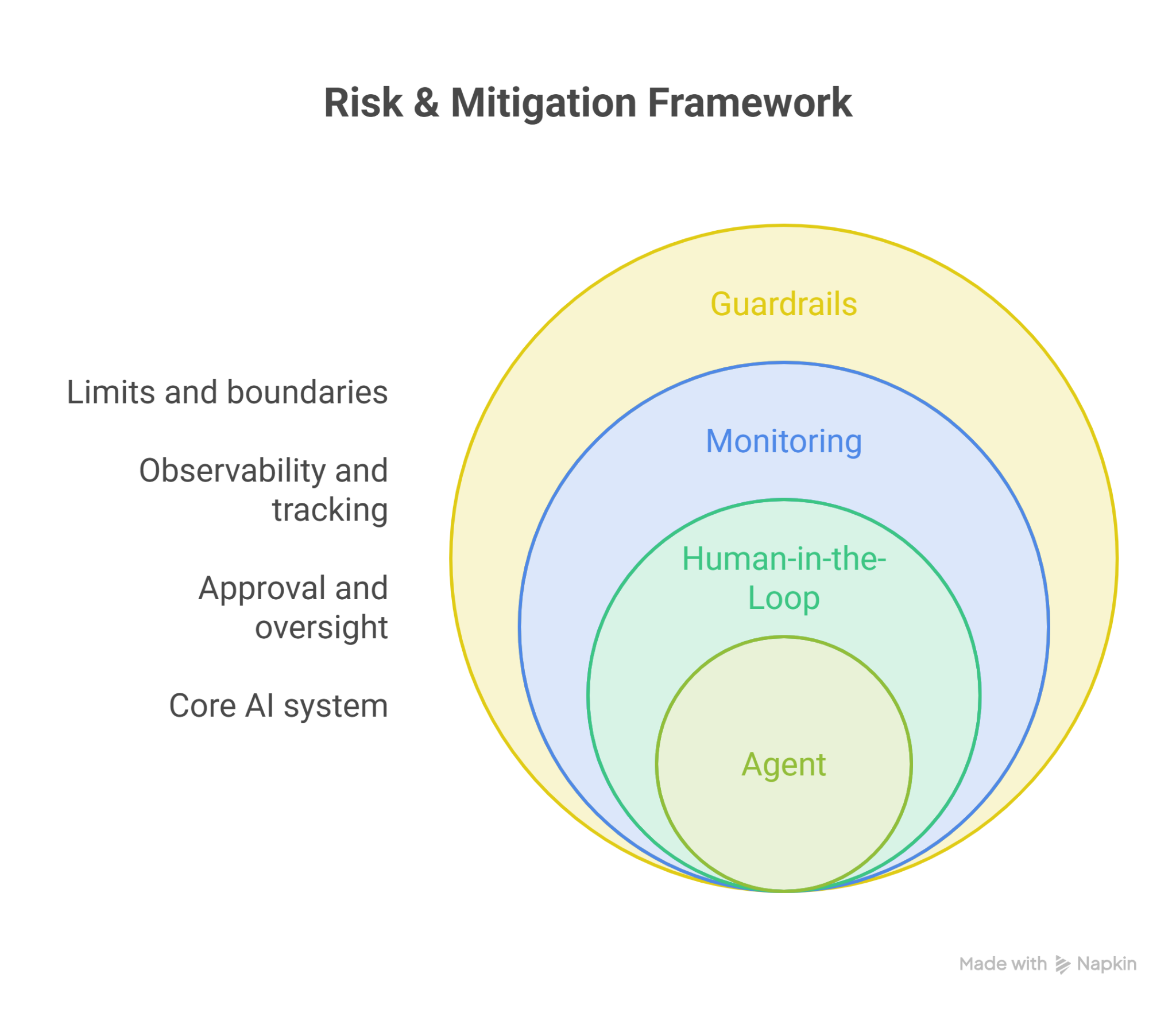
Granting software full agency necessitates a paradigm shift in how we approach enterprise risk. As Agentic AI moves from sandbox environments to mission-critical infrastructure, organizations must address four critical pillars of governance:
- 1. Adversarial Robustness: Defending Against Prompt Injection
Autonomous agents are inherently vulnerable to advanced prompt injection techniques that can manipulate agentic intent. To secure these workflows, developers must move beyond traditional filtering and implement adversarial robustness training and multi-layer validation protocols. - 2. Zero-Trust Data Sovereignty
The operational efficiency of an AI agent relies on continuous access to sensitive biometric, geolocation, and corporate datasets. This necessitates a Zero-Trust Architecture (ZTA) where every data access request by the agent is continuously verified. - 3. Algorithmic Accountability and Liability
The reasoning nature of LLM-based autonomous systems poses significant legal questions regarding liability. Establishing a Human-in-the-Loop (HITL) framework is essential to provide a clear audit trail for regulatory compliance and error mitigation. - 4. Financial Integrity and Transactional Guardrails
Without strict operational boundaries, agents are susceptible to "runaway loops" and automated financial fraud. Implementing hard transactional caps, merchant whitelists, and real-time anomaly detection is critical to maintaining financial integrity.
Future Outlook & Strategic Takeaways
The evolution of digital technology has reached a logical conclusion: the total closure of the loop between human intent and action. By mastering the Full Action Loop: Perceive, Ask, Compose, Act, Pay, and Monitor, we transform technology from a complex tool into an invisible, capable partner. Organizations that fail to architect for "agent-discoverable" environments risk obsolescence in the automated economy.